
Angel
Soins du Corps

Project Overview
Angel Soins du Corps is a high-end medical aesthetics center specializing in non-invasive body and facial treatments (Cryolipolysis, Ultraformer III, Tesla Sculpt). The core challenge was to reduce user anxiety and confusion around medical aesthetic treatments while positioning the brand as premium, trustworthy, and human-centered. Primary Goal Design a digital experience that educates, reassures, and converts hesitant visitors into confident patients.
Client:
Angel Soins du Corps
Year:
2017
Category:
UI/UX Design
/
Webdesign / Content writing / SEO
Location:
Salon de Provence, France
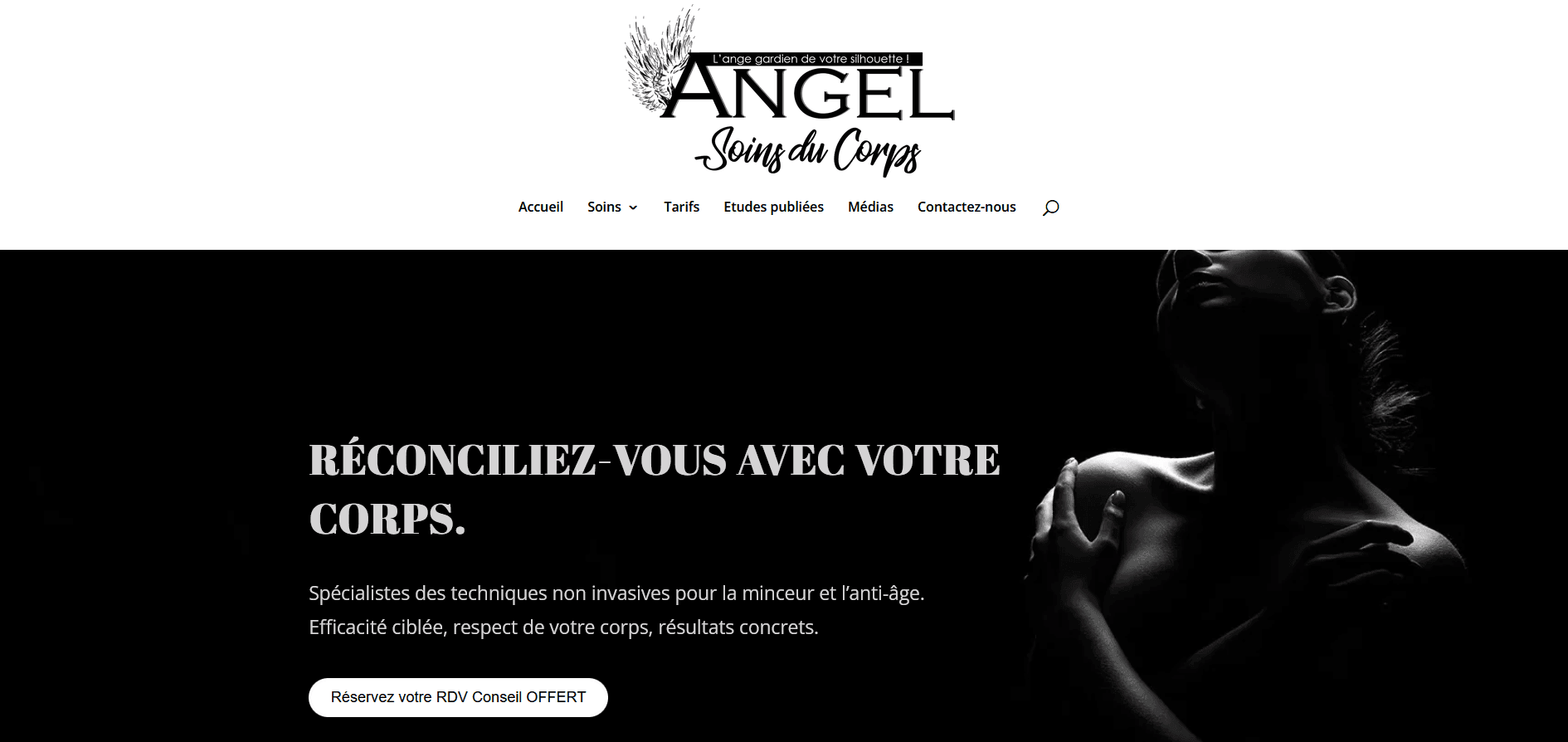
The Challenge
1.The Initial Problem
A.The Problem
Users coming to the site struggled to quickly understand what Angel offers and how the product range relates to their needs, resulting in unclear user goals and low engagement.
Initial analysis revealed several critical issues:
Highly technical medical vocabulary creating cognitive overload
A service-centric structure instead of a user-centric journey
Lack of emotional reassurance for first-time visitors
No clear guidance helping users identify the right treatment for their needs
UX Hypothesis
By simplifying information, reducing cognitive friction, and guiding users through an educational and emotional journey, we could significantly improve engagement and conversion.
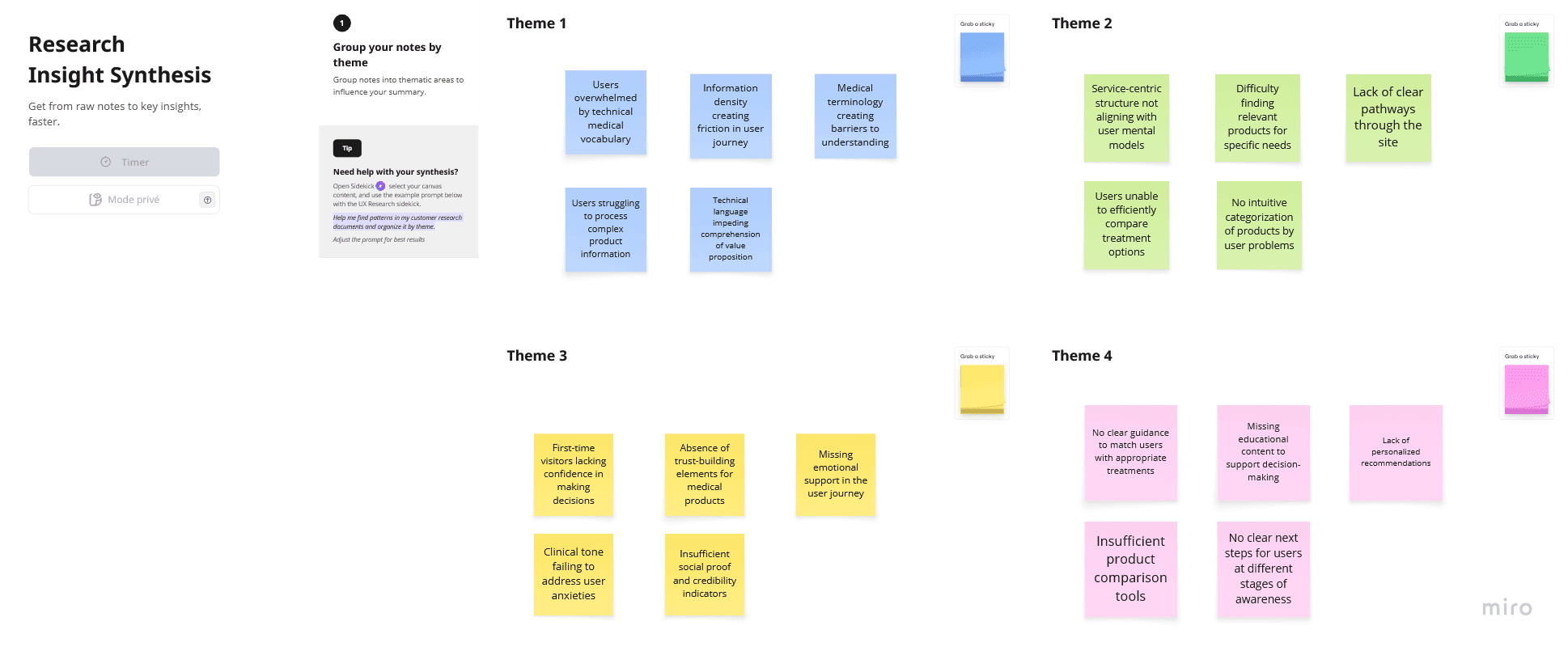
The sticky notes highlight specific issues within each theme, making it easier to identify patterns and prioritize solutions.
Methodology — The N.E.U.R.O. Method
A proprietary framework combining neuroscience, UX research, brand strategy, and data-driven optimization.
N — Neuro-Understanding
(Applied Neuroscience & Cognitive Psychology)
Objective
Understand how users perceive, process, and emotionally react to medical aesthetic content.
Actions
Cognitive load analysis of medical terminology
Identification of anxiety-triggering content patterns
Application of visual hierarchy, perception principles, and reassurance cues
Use of dopamine-driven micro-interactions to reinforce trust
Deliverables
✔ Mental models
✔ Cognitive insights
✔ UX improvement roadmap
E — User Exploration
(UX Research & Data Analysis)
Objective
Capture real user motivations, fears, and decision barriers.
Actions
User interviews and qualitative insights
Behavioral analysis through analytics and heatmaps
Mapping existing journeys and friction points
Prioritization of user needs based on impact
Deliverables
✔ Personas
✔ User journeys
✔ Prioritized user needs
U — Brand Unification
(Brand Strategy & Experience Alignment)
Objective
Align UX and UI with the brand’s premium, medical, and caring identity.
Actions
Definition of brand tone of voice (reassuring, professional, empathetic)
Creation of a coherent visual and emotional universe
Alignment between brand promise and user experience
Deliverables
✔ Visual system
✔ Design language
✔ 360° brand coherence
R — UX Resolution
(Information Architecture & Prototyping)
Objective
Translate insights into a clear, intuitive, and conversion-oriented experience.
Actions
Simplified information architecture
Wireframes focused on progressive disclosure
User flows guiding visitors from need → understanding → trust
High-fidelity prototypes and iterative testing
Deliverables
✔ Validated functional prototype
O — Ongoing Optimization
(Continuous Improvement & Performance)
Objective
Improve performance post-launch through real data.
Actions
A/B testing on content clarity and reassurance messaging
Conversion KPIs monitoring
Continuous user feedback loops
Iterative UX improvements
Deliverables
✔ Optimized versions with measurable performance gains
2.The Key constraint
How to overcome user anxiety and confusion around medical aesthetic treatments
The redesign had to stay true to the brand’s established identity and aesthetic while improving clarity and usability — all within a limited research window and without disrupting existing content.
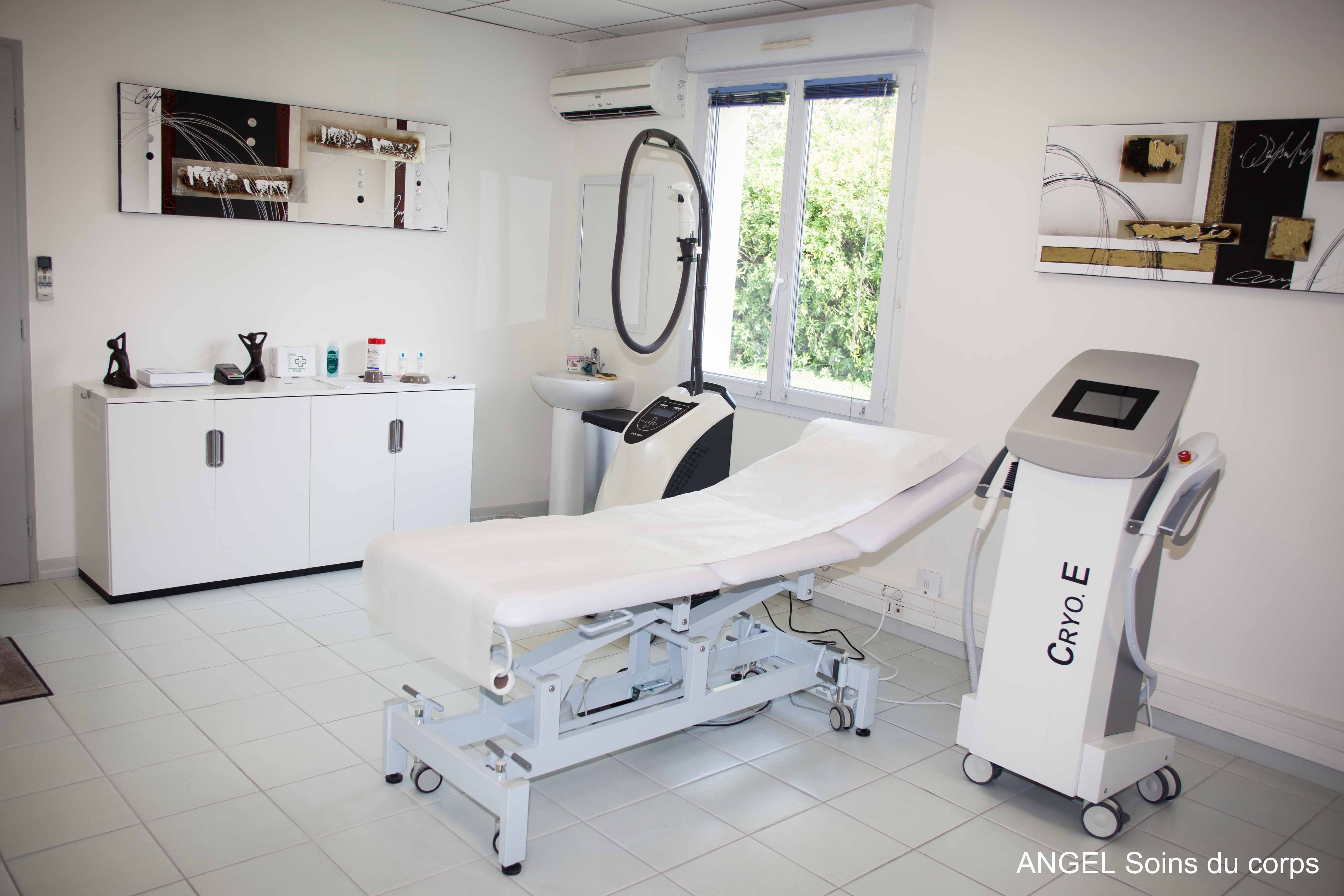
Users interested in services like Cryolipolysis or Ultraformer III often encountered intimidating terminology and technical visuals that increased hesitation rather than confidence. In addition, because the treatments were presented like a service catalogue rather than by user needs, visitors didn’t know where to start or how a treatment matched their personal goals (e.g., wanting a flatter stomach vs choosing between two technologies).
The Solution
3.UX Decision — Clarity-First, Trust-Driven Design
A.The proposed solution: emotion-centred UX-UI
The UX concept: the progressive discovery journey
Reimagined User Journey
The website evolved from a technical service catalog into a guided, educational experience:
Identify the user’s goal
Explain solutions in clear, non-medical language
Reinforce trust through human presence and social proof
This approach significantly reduced anxiety and decision paralysis.
We replaced the ‘service catalogue’ approach with a three-step discovery journey to educate and reassure:
Step 1: The Need (The ‘Why’): A simple section asking ‘What is your goal?’ (e.g., weight loss, anti-ageing, toning).
Step 2: Education (The ‘How’): A simplified product sheet for the suggested solution, using easy-to-understand metaphors instead of medical jargon, with a strong emphasis on certifications and safety.
Step 3: The Human (The Expert): Highlighting the centre's experts (short biographies, professional photos) and integrating reassuring video testimonials.
User journey
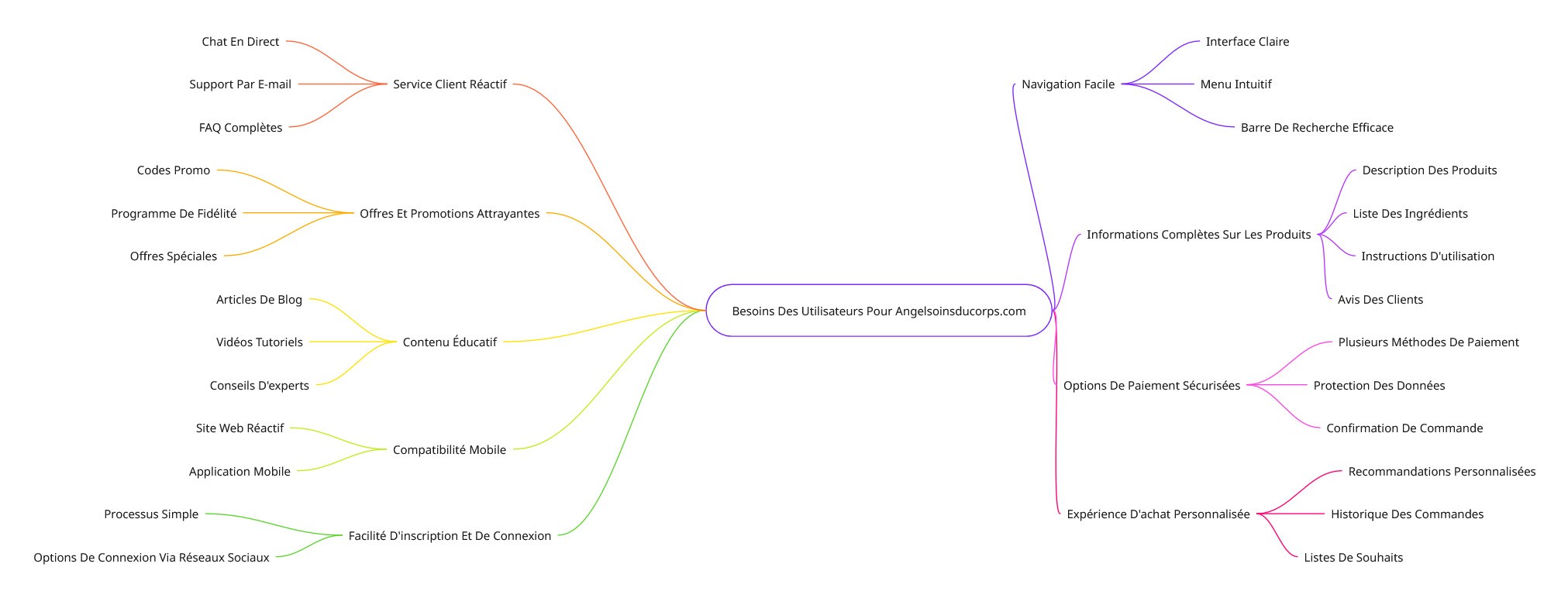
Mapping key user needs and constraints early in the project ensured that design decisions were grounded in real usage logic rather than assumptions.
Timeline project
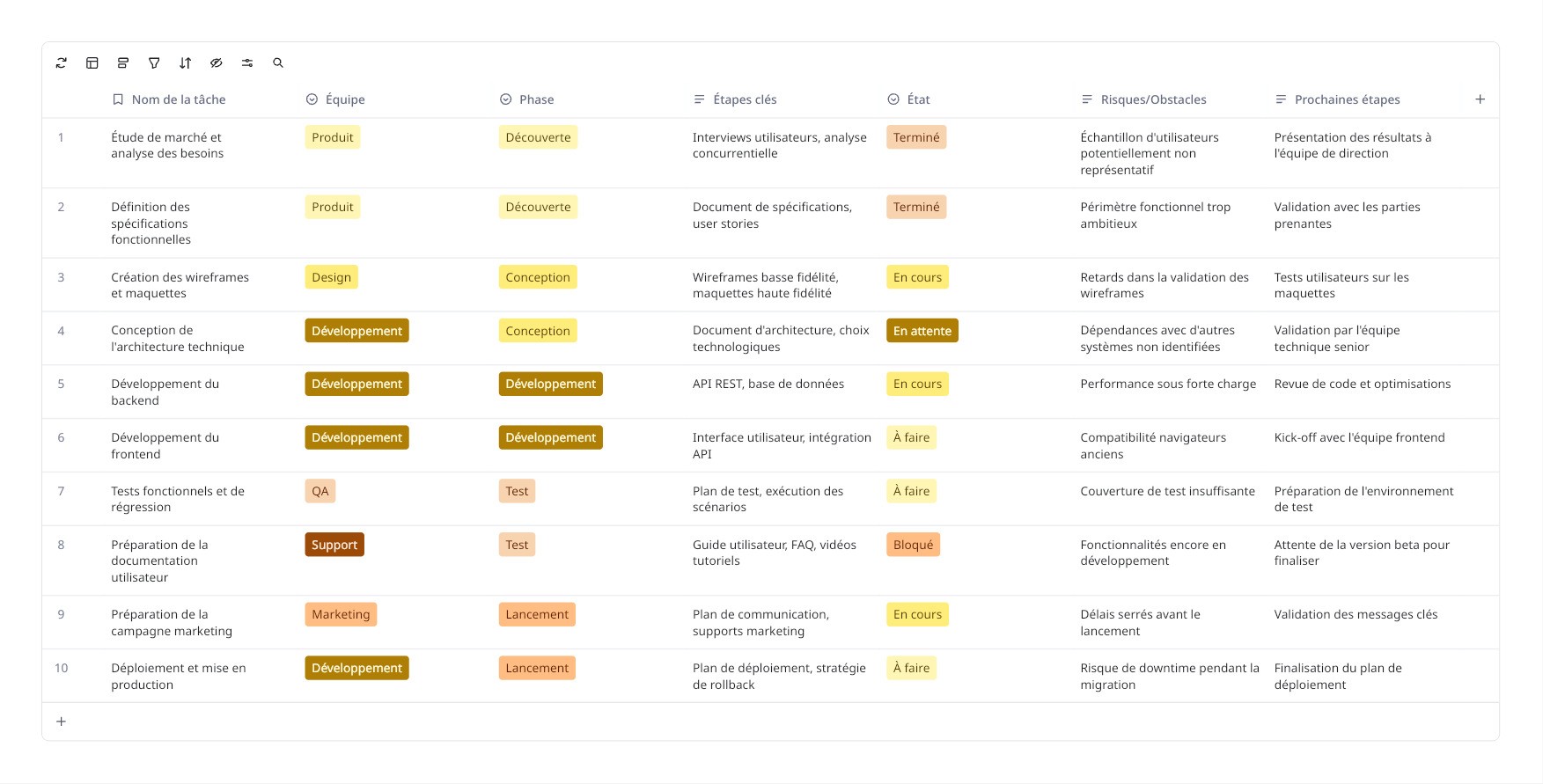
b. UI pillars: serenity and luxury
The user interface was designed around the principles of serenity and understated luxury:
Colour Palette: Use of an off-white and cream gradient (for softness) combined with a deep blue-grey (for professionalism) and subtle rose gold accents (for high-end appeal).
Typography: An elegant serif font for titles (for authority) and a highly legible sans-serif font for body text (for clarity).
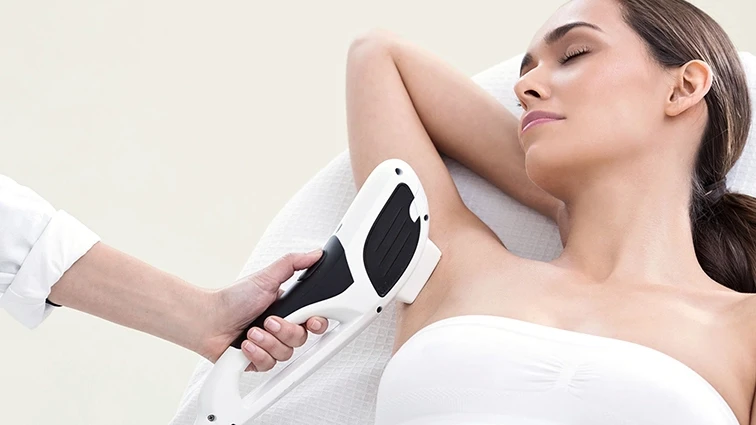
Visualisation: Replacement of photos of machines with soft vector illustrations explaining the process (e.g. a wave of energy passing through the skin) and photos of smiling, relaxed clients.
C. Tools and methodology
To turn the vision into reality, I followed an iterative, user-centred design process:
Research and Information Architecture: Use of Miro (or equivalent) for empathy maps, creation of simplified user flows (reducing the number of clicks required for consultation), and content audit.
Wireframing (Low Fidelity): Creation of functional diagrams in Figma to validate the new navigation structure and three-step discovery journey.
Prototyping (High Fidelity): Development of high-fidelity mock-ups in Figma. This step included the integration of UI elements (colours, typography) and the creation of an interactive prototype for user testing.
User Testing: A/B testing was conducted on product pages to validate the effectiveness of the new metaphorical vocabulary compared to technical jargon.
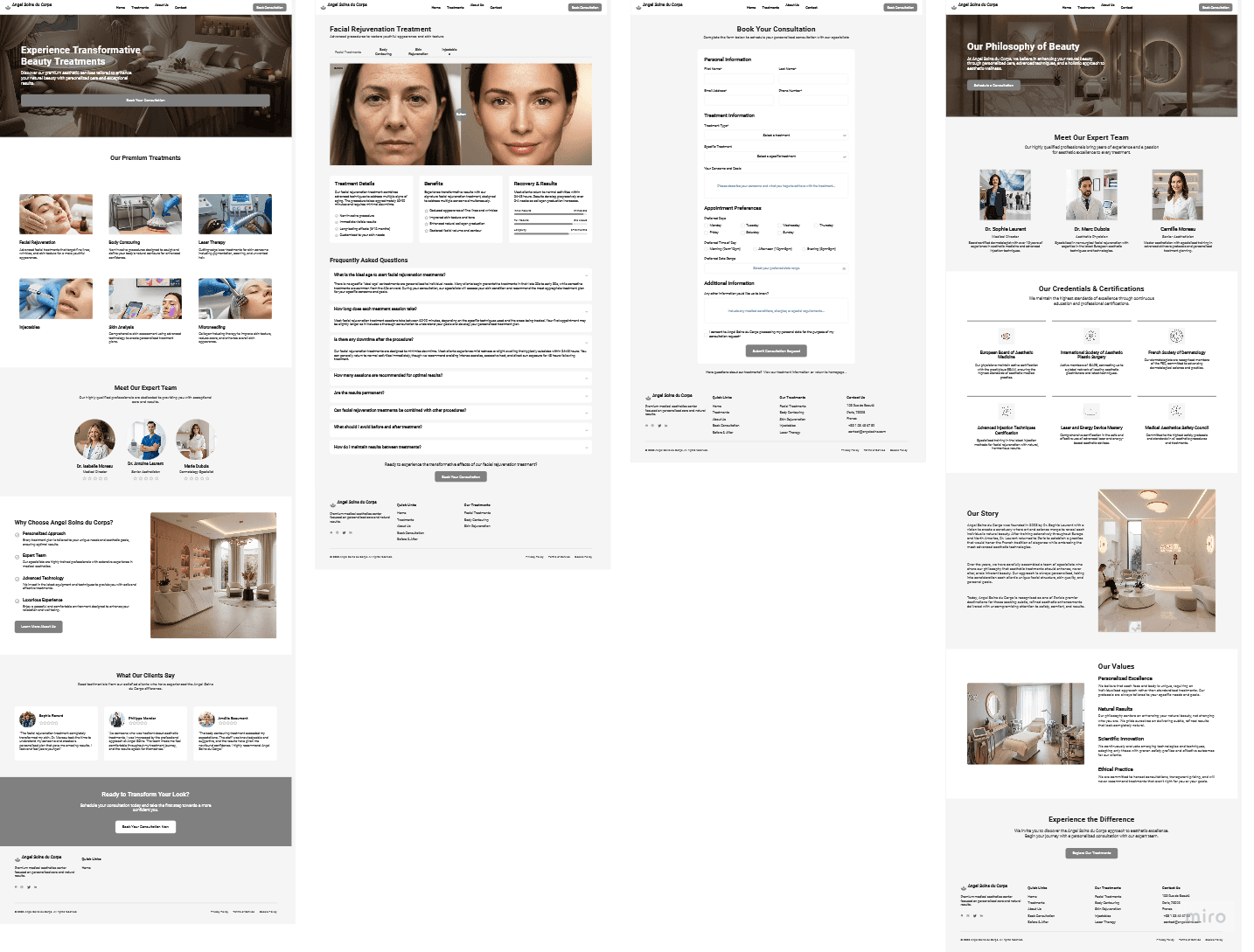
Visual and structural adjustments prioritized based on usability feedback and aligned with brand identity — to support clarity without diluting the aesthetic.
3. Key results
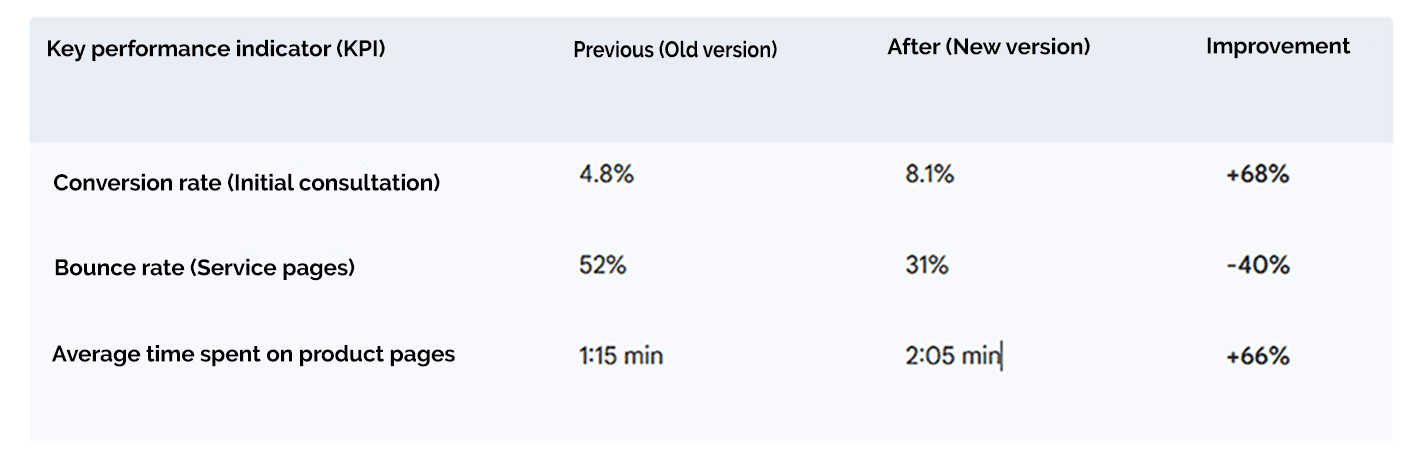
The implementation of the new design was a success, as measured by the following key performance indicators (KPIs) (over a 3-month period):
The logo :
Typography Contrast: The pairing of a strong, serif font for "ANGEL" with a flowing script font for "Soins du Corps" is a solid design choice. It balances "authority/reliability" with "softness/care," which is perfect for the beauty industry.
Literal Symbolism: The inclusion of the angel wings makes the brand name memorable. It connects the visual directly to the word "Angel."
Clear Value Proposition: The tagline "L’ange gardien de votre silhouette" (The guardian angel of your silhouette) combined with "Soins du Corps" leaves no doubt about what the business offers. The customer knows immediately that this is about body contouring and care.


The Result
Conclusion of the Case Study: This case study demonstrates how The N.E.U.R.O. Method bridges neuroscience, UX strategy, and brand design to deliver measurable business impact. By focusing on how users think, feel, and decide, the experience transformed complexity into clarity — and hesitation into confidence. This redesign demonstrated that in the medical aesthetics sector, a UX/UI that emphasises user psychology (trust, reassurance, education) is more effective than simple technical descriptions. By transforming the site into a discreet advisor rather than an aggressive salesperson, Angel Soins du Corps has managed to double its conversion efficiency.
Client feedback
"Virginie is highly professional and responsive. I truly appreciated her strategic advice, UX expertise, and SEO knowledge. I strongly recommend her.”

Christophe MAURICE
,